18.09.2026 12:09 PM
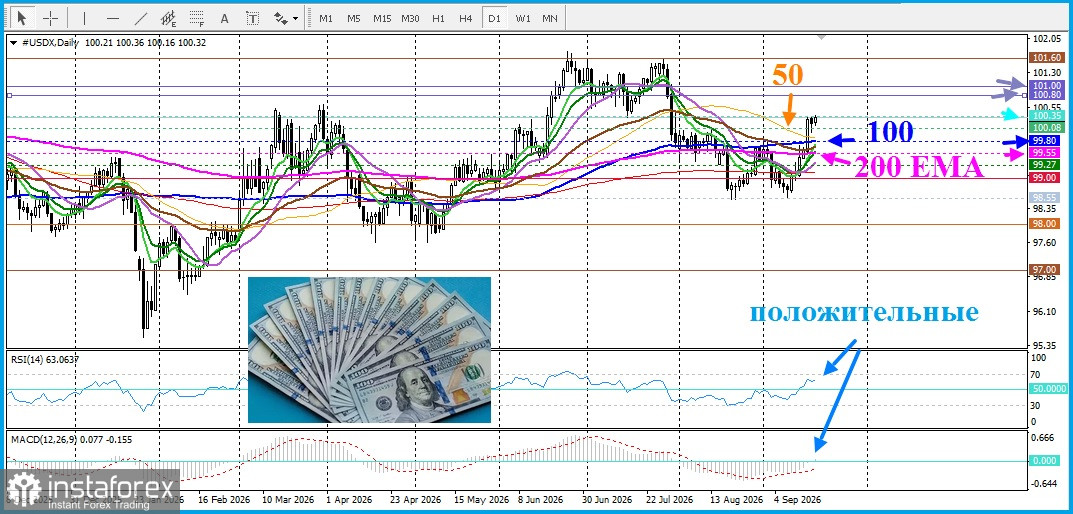
The US Dollar Index (DXY), which tracks the dollar's performance against a basket of currencies, is holding a positive tone and showing resilience near 100.35, remaining close to the high recorded at the end of July. Moreover, a favorable fundamental backdrop supports optimistic expectations for further US dollar appreciation in the near term.
At its Wednesday policy meeting, the Federal Reserve raised interest rates for the first time this year, in line with most economists' expectations. The dot plot signaled expectations for another rate increase later this year. In addition, Fed Chair Kevin Warsh emphasized the importance of stabilizing consumer prices for US economic growth, noting at the press conference that inflation remains too high and has persisted for too long. Meanwhile, inflationary risks related to rising oil prices support the prospects for further Fed tightening.
The deterioration of the situation in the Middle East has also been a significant catalyst for the dollar as a safe-haven asset. Iran's Islamic Revolutionary Guard Corps (IRGC) reported an attack on a Togo-flagged tanker that was allegedly attempting to transit the Strait of Hormuz illegally. US President Donald Trump, in turn, said he would soon make an important decision about resuming large-scale military operations against Iran. This raises additional geopolitical risks, which in turn support a favorable near-term outlook for the DXY and bolster bullish sentiment.
Economists at UOB Group note that recent changes in Fed policy forecasts are playing an important role for the dollar. "Given that we now expect two more Fed rate hikes, the decline in the US rate differential versus G-10 countries that weighed on the DXY since late 2024 is likely to reverse and become supportive of the DXY going forward," the bank says. Considering current interest-rate and currency-market trends, UOB concludes: "We now see upside risks to the USD that exceed our current forecasts both versus G-10 currencies and versus Asian currencies."
From a technical perspective, the DXY maintains a bullish stance, trading above its 100-day SMA and above all key moving averages. Further gains may encounter near resistance in the 100.80–101.00 zone. On the downside, initial support is at the 50-day SMA, followed by the 100-day SMA. Oscillators are positive, confirming the bulls' advantage.
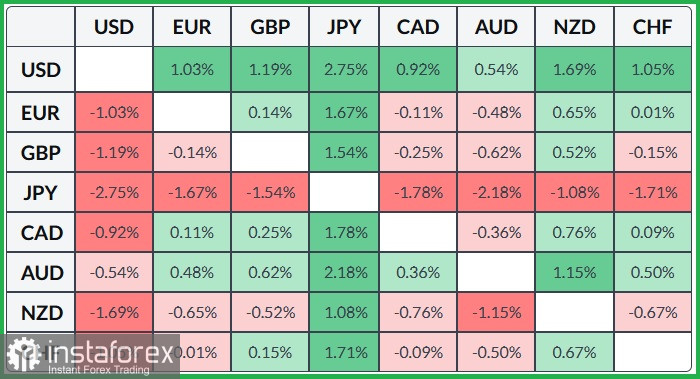
The table below shows the percentage change in the US dollar versus major currencies for the current week. The US dollar posted its largest gain against the Japanese yen.