
Voir aussi


 21.09.2026 04:15 AM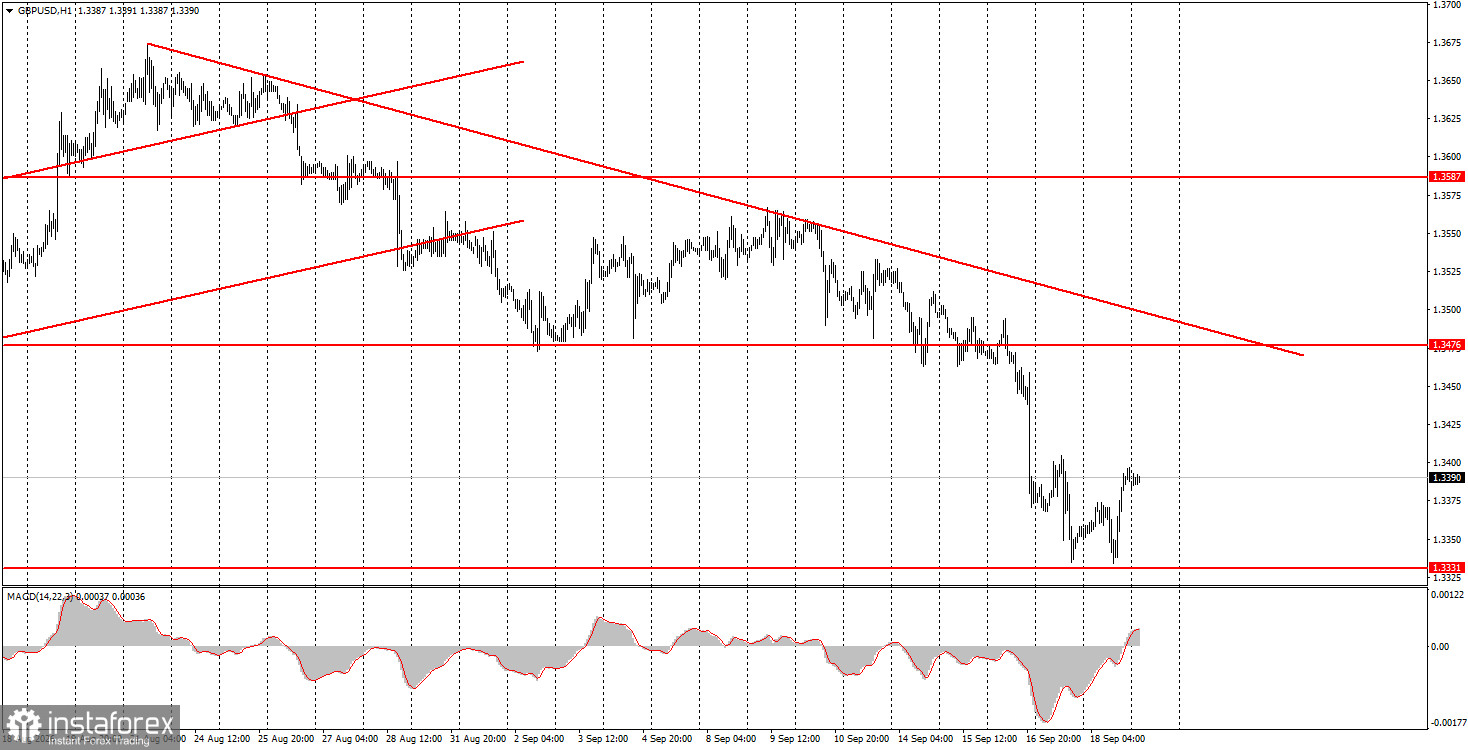
The GBP/USD pair also attempted a modest recovery on Friday, helped in part by the UK retail-sales report. That report showed a 0.5% increase in August versus much lower forecasts, so the pound managed to lift a bit off its knees. In the US on Friday the industrial-production report came in weaker than expected — 0.0% versus +0.3% — so two not especially important releases nonetheless supported the pound. After the month-long decline in GBP/USD, which was driven almost solely by Federal Reserve-policy expectations, we expect at least an upward correction. Of course, the market could spend another two months buying the dollar on the premise of further Fed hikes while ignoring the Bank of England's tightening that will also take place in 2026. But the overall fundamental backdrop and the technical picture again point to a likely recovery.
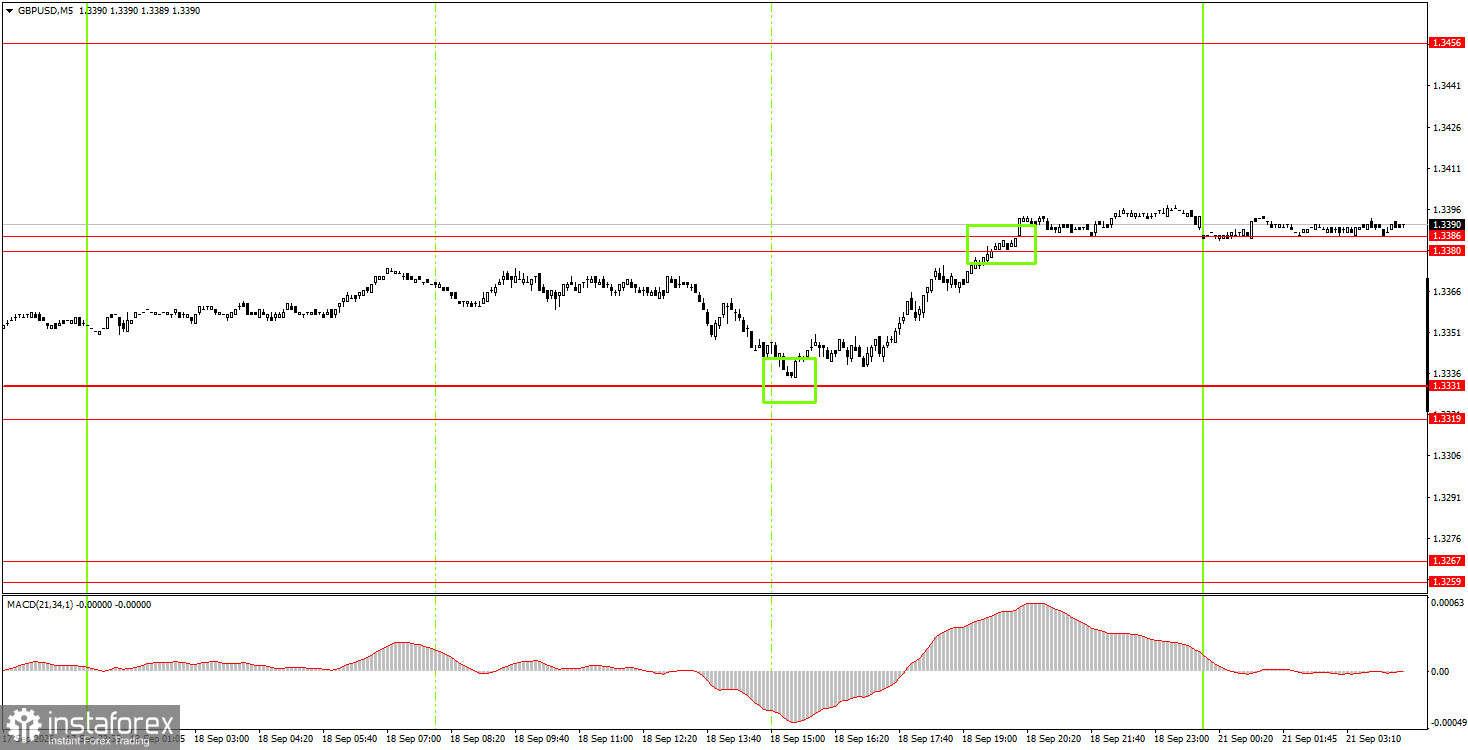
On the 5-minute timeframe on Friday, two trading signals were formed. Early in the US session, price bounced from the 1.3319–1.3331 area, then tested and broke through the 1.3380–1.3386 zone. Thus, novice traders could have opened long positions that produced about 50 pips of profit within a few hours.
On the hourly timeframe, GBP/USD continues a downward trend that has become a full-blown move. The fundamental backdrop for the dollar and the pound shifted sharply on Wednesday evening as the Fed signaled it was ready to continue tightening. As a result, dollar positioning for 2026 has become materially more favorable again. However, the dollar has no other supporting factors.
On Monday, novice traders may consider short positions targeting 1.3319–1.3331 if price consolidates below 1.3380–1.3386. Open long positions targeting 1.3456–1.3476 if price closes and holds above the 1.3380–1.3386 zone.
On the 5-minute timeframe, you can trade the levels 1.3259–1.3267, 1.3319–1.3331, 1.3380–1.3386, 1.3456–1.3476, 1.3587–1.3598, 1.3631–1.3641, 1.3695, 1.3741. No major events are scheduled in the UK or the US on Monday, so GBP/USD volatility may be low.
Price levels (areas) of support and resistance serve as targets for opening buy or sell trades or as sources of signals.
Red lines indicate channels or trend lines that show the current trend and the preferred trading direction.
The MACD indicator (14,22,3) — the histogram and signal line — is an auxiliary indicator that can also provide signals.
Important speeches and reports (listed in the news calendar) can significantly influence currency pair movements. Therefore, during their release, traders should approach trading with utmost caution, or exit the market to avoid sudden reversals against the preceding move.
Beginner forex traders should remember that not every trade can be profitable. Developing a clear strategy and practicing money management are key to long-term success in trading.

