
Сондай-ақ қараңыз


 18.09.2026 12:08 PM
No matter how hard the US Treasury tried to push down Treasury yields with reverse buyback operations, yield rates surged to their highest level since 2007. But once the Fed tightened monetary policy and demonstrated determination in fighting inflation, Treasury yields moved lower. That was a breath of fresh air for US stocks. The S&P 500 logged its best single-day rally in six weeks, buoyed by gains in tech stocks.
Investors resumed the once-popular buy-the-dip strategy and flocked like bees to the honey in shares of the Magnificent Seven and AI-linked companies. Investors came to realize that a couple of Fed rate-hike moves alone won't push the economy into recession or send the S&P 500 into a deep correction. And that is exactly what the updated FOMC projections showed. The consensus forecast implies the federal funds rate will be 4.125% in both 2026 and 2027.
Market expectations for the Fed funds rate
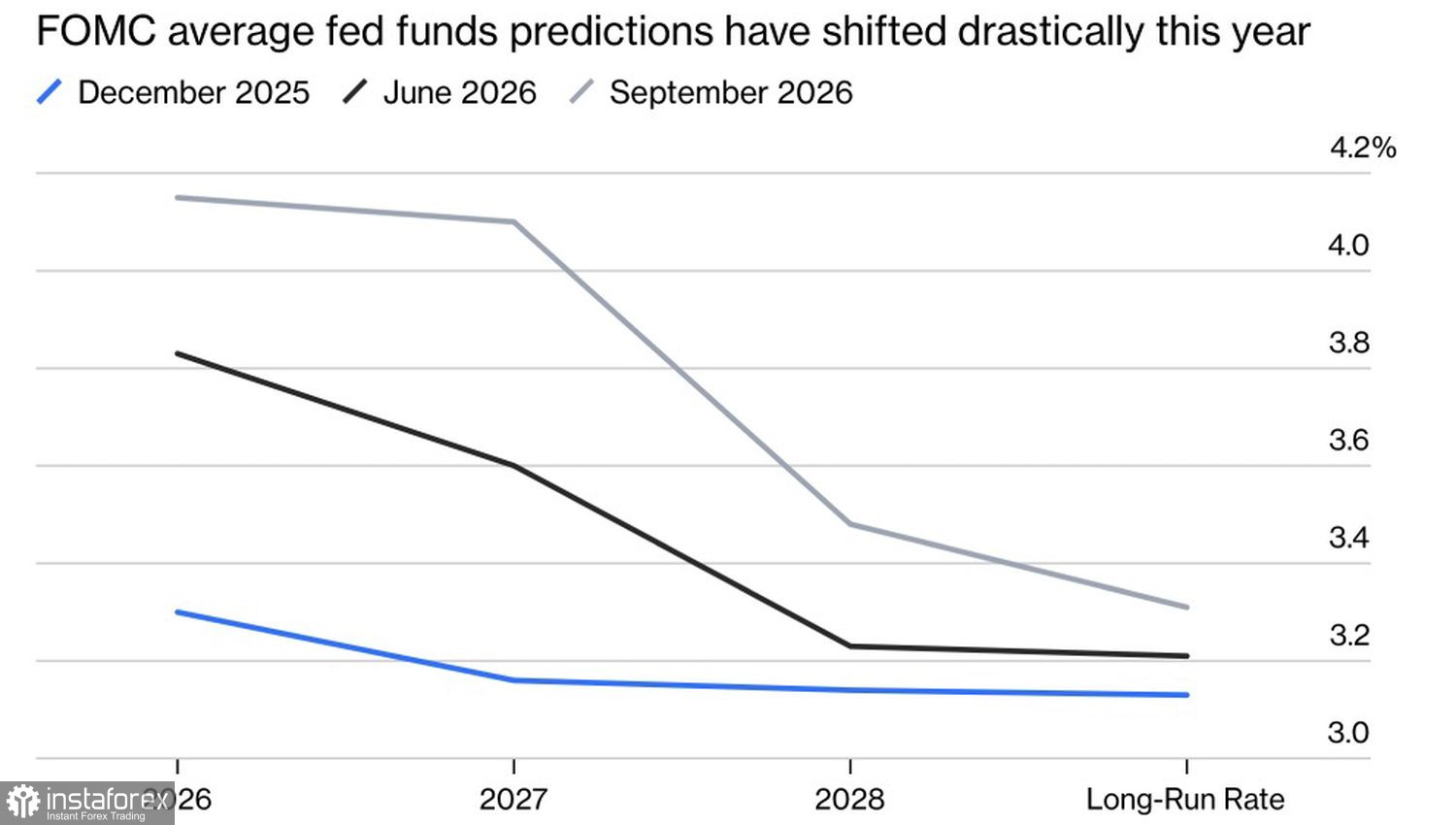
It doesn't matter that derivatives are pricing in three rate hikes over the next 12 months. There is a difference between the bearish-for-stocks CME derivatives' forecasts and actual data. Reality may turn out differently. The baseline scenario is that the Fed will raise interest rates in December and then take an extended pause in the tightening cycle. Such central bank procrastination, combined with a strong economy, would create a Goldilocks regime for the S&P 500 and bring back the market's favorite FOMO strategy — buy or be left behind.
As a result, the stock market rally, led by the Nasdaq Composite, increasingly looks like a relief rally. The Fed has signaled its intention to fight inflation but is unlikely to go too far. Treasury yields fell, and stocks rose.
The S&P 500 is also supported by falling oil prices. Markets have downgraded their expectations about Saudi Arabia shutting the key East-West pipeline, believing the problems are not as severe as initially thought. That has helped push Brent prices lower. The strengthening US dollar adds fuel to the fire: oil is denominated in dollars, so a rising USD is generally negative for crude.
Yardeni Research lowered its year-end S&P 500 target from 8,400 to 7,900, citing an expectation that oil prices will remain elevated longer due to the Middle East conflict. It's no surprise that the drop in Brent is lending a helping hand to US stock indices.
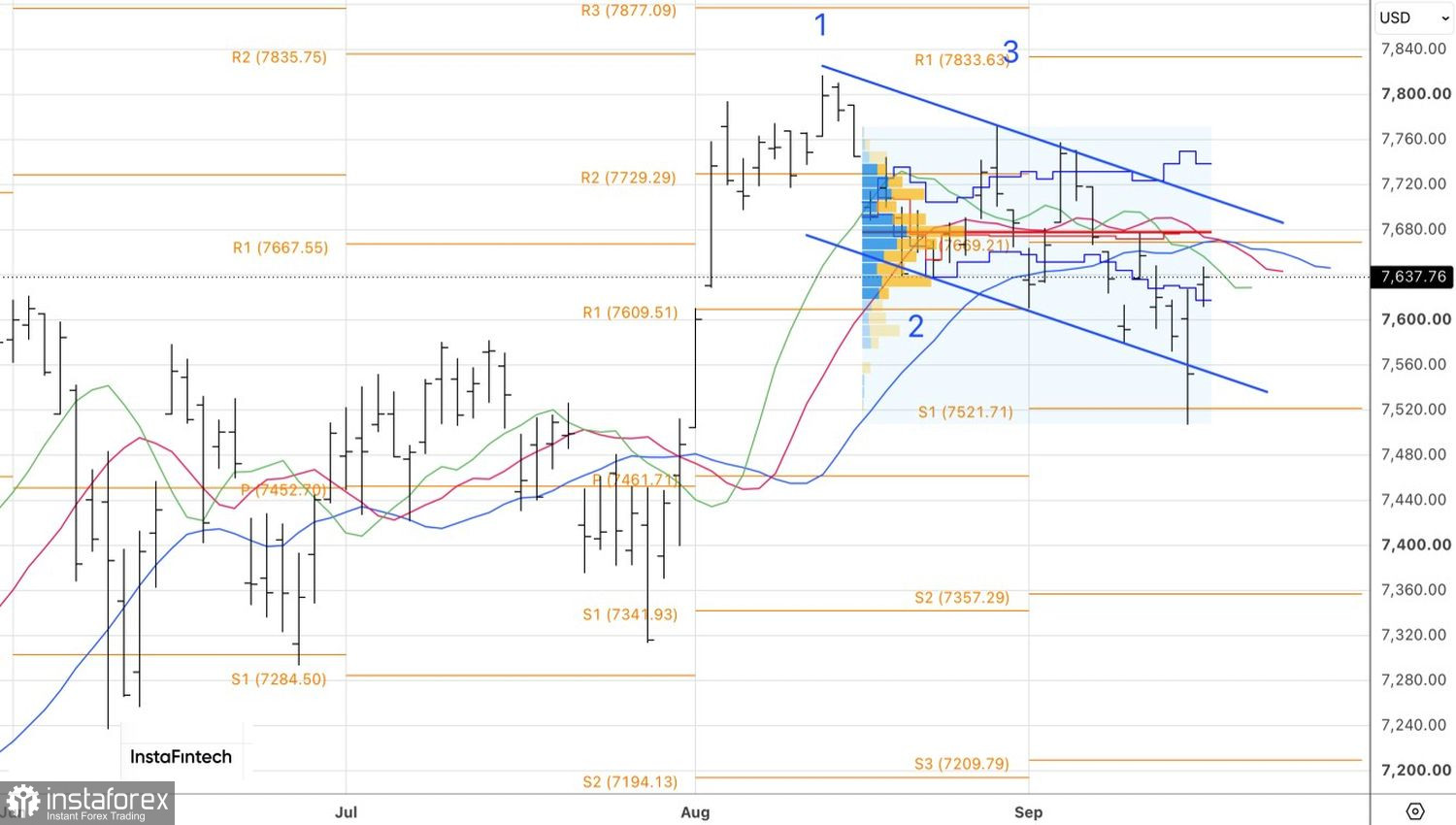
Technically, on the daily chart, the S&P 500 bounced off the lower band of a downward trading channel, which spurred buying. A breakout above the pivot resistance at 7,670 would be a reason to increase buy exposure to the broad stock index.

