
Xem thêm


 16.09.2026 01:54 PM
Analysis of Trades and Trading Advice for the British Pound
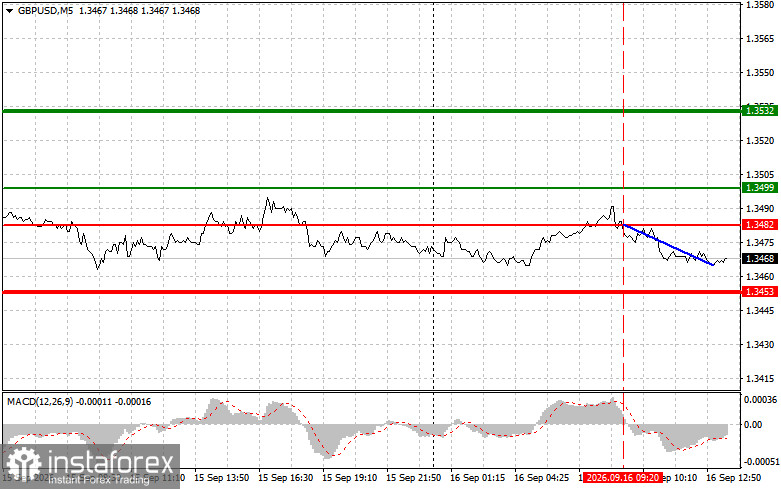
The test of the 1.3482 price occurred when the MACD indicator was just beginning to move downward from the zero line, confirming that it was the right entry point for selling the pound. As a result, the pair declined by 15 points.
UK inflation accelerated for the second consecutive month, reaching 3.1% year-on-year in August and returning to the March high, with the actual result significantly exceeding the Bank of England's own forecast of 2.8%. Fuel prices, which surged by 6.9% amid the ongoing war in Iran, were the main driver of the increase. At the same time, services inflation remained unchanged at 3.4%, while the core inflation rate also remained at 2.6%, meaning that the entire additional increase came from external factors, namely oil prices and transportation costs, rather than domestic price pressures. However, the pound reacted to the release by declining, as traders had already priced in such an increase and reduced their bets on higher borrowing costs from the Bank of England: since the acceleration is driven by imported factors, the regulator has fewer formal grounds to tighten policy at this particular time.
Against the backdrop of this data, the British currency is approaching the Fed's evening decision from a vulnerable position. The market has almost fully priced in a US rate hike to 4.0%, so much more uncertainty is associated with the accompanying forecast and Kevin Warsh's press conference: his rhetoric will show whether the regulator is prepared to continue tightening monetary policy. If the Fed Chair confirms a bias toward further tightening, the pound risks testing new lows relatively quickly, as the inflation data have weakened the already subdued expectations for a Bank of England rate hike. More restrained rhetoric at the press conference, on the other hand, could give the pair at least temporary relief before the market turns its attention back to the domestic UK agenda and the question of how the regulator will respond to the imported nature of August's acceleration in prices.
As for the intraday strategy, I will focus more on the implementation of Scenarios No. 1 and No. 2.
Buy Signal
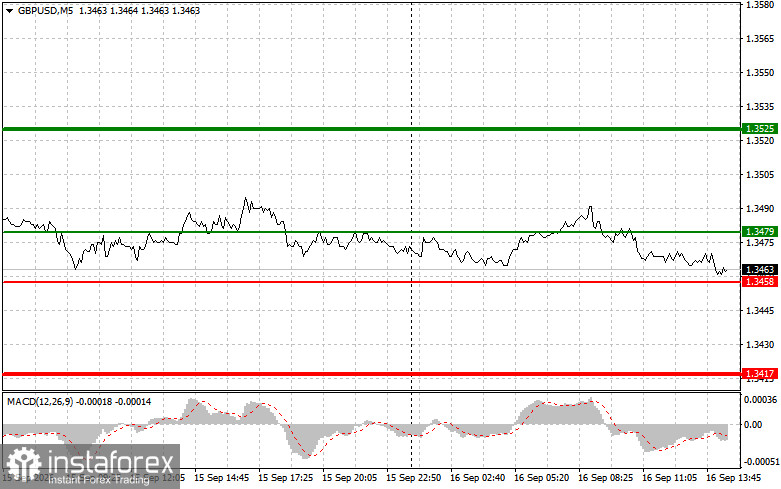
Scenario No. 1: Today, I plan to buy the pound when the entry point is reached around 1.3479 (the green line on the chart), with a target of rising to 1.3525 (the thicker green line on the chart). Around 1.3525, I will exit the long position and open a short position in the opposite direction, targeting a move of 30–35 points in the opposite direction from the level. Any rise in the pound today can be expected only if the Fed adopts a dovish stance. Important! Before buying, make sure that the MACD indicator is above the zero line and is just beginning to rise from it.
Scenario No. 2: Today, I also plan to buy the pound if the price tests 1.3458 twice consecutively while the MACD indicator is in the oversold area. This will limit the pair's downward potential and lead to a reversal upward. A rise toward the opposite levels of 1.3479 and 1.3525 can be expected.
Sell Signal
Scenario No. 1: Today, I plan to sell the pound after the 1.3458 level is broken (the red line on the chart), which should lead to a rapid decline in the pair. The key target for sellers will be 1.3417, where I will exit the short position and immediately open a long position in the opposite direction, targeting a move of 20–25 points in the opposite direction from the level. Strong pressure on the pound may return at any time. Important! Before selling, make sure that the MACD indicator is below the zero line and is just beginning to decline from it.
Scenario No. 2: Today, I also plan to sell the pound if the price tests 1.3479 twice consecutively while the MACD indicator is in the overbought area. This will limit the pair's upward potential and lead to a reversal downward. A decline toward the opposite levels of 1.3458 and 1.3417 can be expected.
What Is Shown on the Chart:
Important. Beginner Forex traders should make entry decisions very carefully. Before the release of important fundamental reports, it is generally best to stay out of the market to avoid being caught in sharp exchange-rate fluctuations. If you decide to trade during news releases, always place stop orders to minimize losses. Without stop orders, you can lose your entire deposit very quickly, especially if you do not use proper money management and trade large volumes.
And remember that successful trading requires a clear trading plan, such as the one presented above. Making spontaneous trading decisions based on the current market situation is inherently a losing strategy for an intraday trader.

